Skip to content


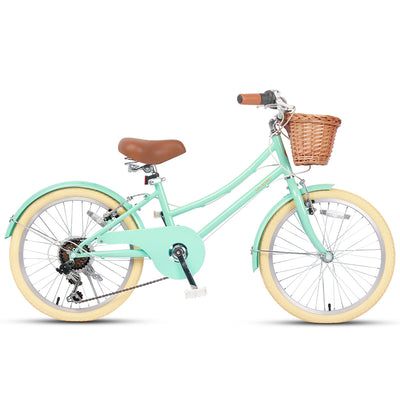


Table of Contents
After comparing and comparing popular 18-inch girls' bikes on the market, we found that an 18-inch bike with a lightweight frame, reliable braking system, and a suitable seat height range is one of the best choices for girls ages 5 to 8 who are transitioning from training wheels to independent riding.
In this guide, we will focus on key factors such as frame size, weight, brake type, and tire specifications to help parents find a bike that truly fits their child’s needs.
Who Is an 18 Inch Girls Bike Best For?
An 18-inch bike is not a one-size-fits-all product based only on age. The most important factors are a child’s height and inseam length. Based on common bike sizing guidelines, 18-inch bikes are typically suitable for children between 41 and 57 inches tall, with an inseam of about 18 to 23 inches. This size range usually matches children around 5 to 10 years old.
In real-world use, girls in this size range are often at a stage of rapid riding development. They may have just moved beyond training wheels and started riding short distances on neighborhood streets or park paths. That means an 18-inch girls’ bike needs to balance two important needs: being easy to handle and providing room for growth. The seat height should have enough adjustment range to stay comfortable for the next 12 to 18 months, while the bike should not be too heavy, as extra weight can make starting, turning, and stopping more difficult for young riders.
Best 18 Inch Bikes for Girls in 2026
Based on real-world testing data and user feedback, we have organized the following four recommendation categories based on different riding needs. This helps parents quickly narrow down their options.
|
Recommendation Category |
Key Advantage |
Best For |
Key Indicators |
|
Best Overall |
Balanced performance across different needs |
A versatile bike for multiple riding situations |
Weight ≤10 kg, dual brake system |
|
Best Lightweight |
Ultra-light frame and easier handling |
Smaller or less physically strong children |
Weight ≤9 kg |
|
Best for Beginners |
Easier learning experience and better stability |
Kids who have just moved away from training wheels |
Wider tires, coaster brake |
|
Best for Neighborhood Rides |
Complete accessories and everyday practicality |
Short rides around neighborhoods and parks |
Includes basket, fenders, and kickstand |
Best Overall 18 Inch Girls Bike

If parents want a better balance between safety, comfort, durability, and everyday features, the Glerc Little Molly 18 Inch is a more well-rounded choice. It features a durable high-strength steel frame with a front V-brake and rear coaster brake. Children can practice speed control with the hand brake and stop by pedaling backward when needed.
The low-step frame, short-reach brake levers, and adjustable saddle and handlebars make it easier for children to get on and off the bike while maintaining a comfortable riding position. The 18-inch version is suitable for children around 41 to 54 inches tall and weighs approximately 25 lbs.
The bike comes with removable training wheels, a kickstand, a full chain guard, front and rear fenders, a basket, a bell, and reflectors. It is suitable for learning to ride while also supporting everyday rides in parks and neighborhoods. Around 85% of the bike comes pre-assembled, so parents usually only need to install a few remaining parts.
Best Lightweight Bike for Girls
For smaller children, bike weight can affect how easily they start, turn, stop, and lift the bike after a fall. Look for an 18-inch girls bike with a simple frame, balanced weight distribution, and only the accessories your child will actually use. A streamlined design without a heavy rear rack or oversized basket can feel easier to control during everyday rides. Parents should also check the minimum seat height and compare it with the child’s inseam, as a well-fitted bike is often easier to handle than a lighter bike that is too large.
Best 18 Inch Bike for Beginner Riders

For children who are just learning to pedal, steer, and brake independently, the Glerc Starry 18 Inch offers a more beginner-friendly setup. It uses a simple single-speed drivetrain, so children do not need to focus on shifting while learning to ride.
The 2.4-inch wide tires provide a larger contact area with the ground, offering better stability on driveways, sidewalks, and park paths. The 18-inch version includes both a front V-brake and rear coaster brake, allowing children to start with the more intuitive coaster brake and gradually practice hand brake control.
Removable training wheels provide support during the early learning stage and can be taken off once the child develops better balance. The steel frame and wider tires add some extra weight, but this trade-off is reasonable for beginners who prioritize stability and durability.
Best Girls Bike for Neighborhood Rides

If the bike is mainly used for neighborhood streets, parks, and short family rides, the Glerc Fantacy 18 Inch offers more practical everyday features. It comes with a removable LED front light, a bell, and reflectors to improve visibility during evening rides. The water bottle holder also makes it easier for children to carry water on longer park rides.
The 18-inch version features front and rear brakes, an easily adjustable saddle, and a full chain guard, providing a good balance between control and everyday protection. Available in colors such as pink, it is a suitable choice for girls who want a sporty look while still needing practical accessories.
Compared with retro-style models that include baskets and fenders, this bike has a simpler design and is better suited for everyday riding on flat roads.
What to Look for in the Best 18 Inch Bike for Girls
When choosing an 18-inch girls’ bike, prices can range from a few dozen dollars to more than $200. The main differences usually come from frame material, brake system, accessory quality, and overall bike weight. Based on our testing, the following four factors are the most important criteria we use for evaluation.
Choose the Right Fit and Seat Height
The right size is the foundation of safe riding. The evaluation method is simple: have the child sit on the bike seat with the front of both feet able to touch the ground. When the pedal reaches its lowest position, the knee should maintain a slight bend of around 15° to 20°.
For more detailed instructions, use our kids bike seat height guide to compare inseam measurements and adjust the saddle for your child’s riding level.
Most 18-inch kids’ bikes offer a seat tube adjustment range of about 4 to 6 cm, but the difference between brands can be significant. A larger adjustment range usually means the bike can continue to fit the child as they grow, providing a longer usable life.
Check the Bike Weight and Frame Design
Bike weight directly affects a child’s experience when starting, turning, climbing, and stopping. For girls ages 5 to 7 with an average weight of around 20 to 25 kg, we recommend prioritizing 18-inch kids’ bikes that weigh approximately 20 to 24 lbs (9 to 11 kg). This weight range provides a good balance between frame stability and everyday handling, allowing children to push, turn, or lift the bike after a fall without too much difficulty.
In addition to weight, parents should also consider whether the frame is easy for children to mount and dismount. A low-step frame reduces the amount of leg movement needed when getting on or off the bike, making starting, stopping, and emergency dismounts easier. This is especially helpful for children who are moving up from a 16-inch bike or are still building confidence with independent riding.
Look for Easy-to-Use Brakes
The brake system is one of the most important safety factors for kids’ bikes. 18-inch bikes usually come with three common brake setups: coaster brake only, front hand brake with rear coaster brake, and dual hand brakes.
For beginners who have just moved away from training wheels, a coaster brake (stopping by pedaling backward) is often more intuitive and easier to learn. For children with more riding experience, dual hand brakes usually provide stronger braking performance and more precise control.
Brake lever reach is also an important detail. Short-reach brake levers designed for children, with a reach distance of around 6 to 7 cm, allow smaller hands to reach the levers comfortably and apply enough force for effective braking.
Consider Gears, Tires and Everyday Features
For most bikes in this size range, a single-speed design is the standard choice. It is more than enough for everyday riding on flat roads while also reducing mechanical issues and maintenance needs.
For tires, pneumatic tires with a width of 2.0 to 2.125 inches can provide good grip and shock absorption on concrete roads and light dirt paths. In addition, accessories such as a chain guard, fenders, basket, and kickstand do not directly improve riding performance, but they can significantly improve everyday convenience. A full chain guard, in particular, helps prevent pants or skirts from getting caught in the chain.
Is an 18 Inch Bike the Right Size for Your Girl?
The most reliable way to determine whether an 18-inch bike is suitable is not to look at age, but to measure the child’s actual inseam length. Follow these steps:
- Have the child stand barefoot with their back against a wall and their feet shoulder-width apart.
- Place a hardcover book between the child’s legs with the spine facing upward, pressing it gently against the inseam area.
- Measure the distance from the floor to the top edge of the book. This is the child’s inseam length.
If the measurement is between 48 and 58 cm, an 18-inch bike is usually a suitable choice. For measurements below 48 cm, consider a 16-inch bike. If the inseam is above 58 cm, a 20-inch bike may be a better option.
18 Inch Girls Bike Safety and Setup Tips
Buying the right bike is only the first step. Proper assembly, adjustments, and safety education are equally important. The following steps should be completed before the first ride.
Adjust the Seat and Handlebars Before the First Ride
The standard for saddle height is that when the child sits on the bike, the balls of both feet should just touch the ground. The handlebar height should be about 2 to 4 cm higher than the saddle, allowing the child to maintain a slight forward lean without hunching over.
After making adjustments, always confirm that the quick-release levers or bolts on the seat post and handlebars are tightened securely and remain within the safety markings.
Check Brakes, Tires and Reflectors
Squeeze the hand brake levers firmly and check whether the brake pads contact the rims evenly on both sides. Inflate the tires to the recommended pressure shown on the tire sidewall, which is usually around 30 to 40 PSI. Also, make sure the front and rear reflectors and wheel spoke reflectors are complete and in good condition.
These checks only take 3 to 5 minutes but can significantly reduce riding risks.
Teach Safe Riding Habits for Neighborhood Rides
For children ages 5 to 8, safety awareness is more important than riding skills. Before riding, children should always wear a CPSC-certified helmet, stay on sidewalks or designated bike paths, and stop to check carefully when approaching intersections or driveway entrances.
Parents should accompany children throughout the early riding stage and gradually help them develop the ability to judge road conditions and make safer riding decisions.
How to Choose the Right Bike for Your Child
The decision process for choosing a bike for a child can be summarized in three steps:
Step 1: Measure the child
Use inseam length to determine the right wheel size.
Step 2: Define the riding needs
Based on the child’s riding experience and main usage scenarios, choose the appropriate brake type, tire width, and accessory options.
Step 3: Check overall quality
Focus on details that affect long-term use, such as frame weld quality, smoothness of the bearings, and paint durability.
Price is not the only factor that matters. A durable kids’ bike with a wide adjustment range can often be used for 18 to 24 months, making the daily cost much lower than frequently replacing bikes.
Glerc offers a complete kids’ bike lineup from 12 to 26 inches, along with detailed size charts. Parents can match the right model based on their child’s actual measurements.
Final Thoughts
Choosing the right 18-inch bike for a girl comes down to one key principle: finding the right fit. Use inseam length to determine the correct size, compare the child’s weight with the bike’s weight to evaluate whether it will be easy to handle, and then match the brake system and accessories based on riding experience.
We hope this guide helps parents make a more informed buying decision, so every ride can be safer, more confident, and more enjoyable for their child.
FAQ
What age is an 18 inch bike for?
An 18-inch bike is typically suitable for children ages 5 to 8, but age should only be used as a general reference. The more reliable factors are a child’s height (105 to 125 cm) and inseam length (48 to 58 cm).
Children of the same age can differ in height by more than 10 cm, so taking actual measurements is always a more accurate way to choose the right bike than selecting based on age alone.
Should an 18 inch girls bike have training wheels?
This depends on the child’s riding experience. If the child has never used a balance bike or ridden a bicycle before, removable training wheels can effectively reduce the initial learning barrier. With regular practice, many children can transition to riding on two wheels within 2 to 4 weeks.
Children who already have good balance skills can move directly to two-wheel riding. In some cases, training wheels may limit their turning ability and slow the development of better balance and bike control.
How do I measure my child for an 18 inch bike?
The most important measurement is inseam length. Have the child stand barefoot against a wall, place a book between their legs with the spine pressed gently against the inseam area, and measure the vertical distance from the floor to the top of the book.
Compare this measurement with the minimum saddle height listed for the bike. The child’s inseam should be equal to or slightly greater than the minimum saddle height by 1 to 2 cm, ensuring that they can place the balls of their feet firmly on the ground while sitting on the bike.


GLERC creates stylish, durable kids bikes designed to help families ride together with confidence. From sizing guidance to assembly support, our team shares practical advice to make every ride safer and more fun.