Skip to content


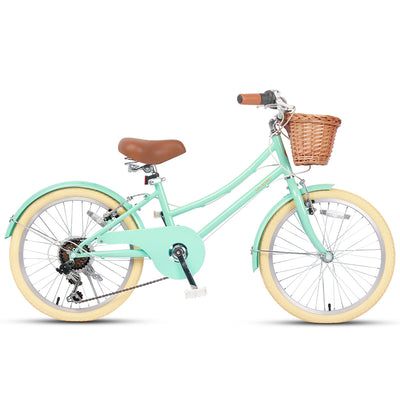


Table of Contents
Most 6-year-old girls fit best on an 18-inch bike. A 20-inch bike is usually only a good option once a child reaches about 45 inches tall and can already start, turn, and brake on their own. This guide uses height, inseam, riding skills, and real-world test rides to help you decide between an easier-to-manage 18-inch bike and a 20-inch bike that will last longer.
How to Choose the Right Bike Size for a 6 Year Old Girl
When choosing a kids bike, age only helps narrow down the options. It shouldn't decide the size. Two 6-year-old girls can have very different heights, inseams, arm lengths, and riding experience. Because of this, you need to look at both their physical measurements and their actual riding skills.
Measure Her Height and Inseam
Have your child wear the shoes she normally rides in and stand straight against a wall. Measure from the top of their head to the floor for their total height. Next, place a thick book between their legs, sliding it up gently until it hits their crotch. Measure from the top edge of the book to the floor to find their inseam.
The inseam tells you if a child can safely get on and off a bike much better than age does. When kids sit on the saddle, they need to reach the pedals. They also need to plant their feet quickly if they lose balance. If you only look at height and skip the inseam, the bike might look like a good fit, but your child might barely touch the ground with their tiptoes when they stop.
Match Her Size With the Right Wheel Size

In kids bikes, 18-inch and 20-inch usually refer to the wheel diameter, not the frame size. When the wheel size increases, the frame height, wheelbase, handlebar reach, and overall weight usually increase too. Because of this, switching from an 18-inch to a 20-inch bike changes the handling much more than the two-inch difference suggests.
You can use the following ranges as a basic guide for current Glerc girls bikes:
|
Child's Height |
Recommended Size |
Buying Logic |
|
38-53 inches |
16-inch |
Most 18-inch models may still be too tall |
|
41–57 inches |
18-inch |
Easier to get on and off, start, and steer |
|
45–74 inches |
20-inch |
Their knees might quickly get cramped on an 18-inch bike |
If your child is under 41 inches tall or still finds an 18-inch model difficult to control, a 16 inch girls bike may offer a safer standover height and easier handling.
Consider Her Riding Experience and Confidence
A good fit on paper does not mean your child is ready for a bigger bike. You also need to see if she can start on her own, ride in a straight line, turn at low speeds, stop on time, and naturally put her feet down when stopping.
A 6-year-old girl who is 48 inches tall but just starting to learn will usually feel more in control on an 18-inch bike. On the other hand, a child of the same height who has been riding confidently for two years can likely handle a 20-inch bike.
The real question is not whether she can manage to ride it. It is whether she can stay in control during sudden turns, on bumpy roads, or during emergency stops. Instead of buying a bike that is clearly too big just to get an extra year of use, it is better to prioritize her safety and riding confidence right now.
18 Inch vs 20 Inch Bike for a 6 Year Old Girl

Both 18-inch and 20-inch bikes can work for a 6-year-old girl, but they fit different physical needs and riding stages. An 18-inch bike focuses on easy control, while a 20-inch bike is better for taller kids with stable riding skills.
Why an 18 Inch Bike May Be a Better Fit
For a 6-year-old girl between 41 and 57 inches tall, an 18-inch bike is usually the safer choice. A lower standover height and shorter handlebar reach keep the bike from tipping to one side when starting. This setup also makes it easier for kids to steer on narrow sidewalks, neighborhood roads, and park paths.
An 18-inch bike is also great for kids who still need training wheels or just took them off. You can set the seat low at first so she can plant both feet or the balls of her feet flat on the ground. Once her starting and braking skills improve, you can gradually raise the seat.
For example, the Glerc Little Miss 18-inch fits kids between 41 and 54 inches tall. It features a low standover height, short-reach brake levers, an adjustable seat and handlebars, a fully enclosed chain guard, and removable training wheels. For a 6-year-old girl who wants a balance of easy learning, everyday riding, and a cute design, this type of setup is much more practical than buying a bike that is too big.
When a 20 Inch Bike Is the Right Choice
You can consider a 20-inch bike once your child reaches about 45 inches tall, her inseam matches the minimum seat height of the specific model, and she can already handle starting, steering, and braking on her own.
A 20-inch bike is better for longer neighborhood rides, paved park paths, and family outings. Larger wheels handle pavement cracks and slight bumps more smoothly. However, the bike will also sit higher, and low-speed turns will require better balance.
Do not buy a 20-inch bike early just because your child will grow quickly. If she can only touch the ground with her tiptoes on one side, has to lean far forward to reach the handlebars, or frequently pulls the bars to their absolute limit when turning, the bike is still too big for now.
How to Check if a Bike Fits Your Child
A size chart only helps with the first screening, but a real test ride is the final test. Parents should check the seat height, upper body posture, brake reach, and how the child gets on and off the bike, rather than just confirming if their feet can touch the ground.
Proper Seat Height and Riding Position
Beginner riders can have the seat set slightly lower. When sitting on the saddle, both feet should touch the ground firmly. This helps them catch themselves if they lose balance, rather than relying on a parent to hold the back of the seat.
Experienced riders can raise the seat a bit. When the pedal is at its lowest point, the knee should have a slight bend. It should not be completely straight or cramped up. A seat that is too low forces the knees too high, which causes quick fatigue after just a few minutes of riding. A seat that is too high causes the child to rock their hips from side to side to reach the pedals. A lower setup where both feet touch flat works best for beginners, while skilled riders can adjust to a height where their toes can still touch the ground.
Easy Reach to Handlebars and Brakes
When your child holds the handlebars, her shoulders should be relaxed and her elbows slightly bent. She should not have to lock her arms or constantly lean forward. When she turns the bars, her upper body should not pull away from the seat.
Brake reach is just as important. Have your child squeeze the hand brake from her normal riding grip. Make sure she can easily wrap her fingers around the brake lever without opening her hand too wide to reach it. Short-reach brake levers usually work best for smaller hands.
During a test ride in a safe, open area, have your child ride slowly and then stop at a specific spot. Her ability to ride in a straight line and stop smoothly over a few tries tells you much more than simply pulling the brakes while standing still.
Comfortable Standing and Getting On and Off
Have your child stand with both feet flat on the ground, straddling the bike. There should be some clearance between the top tube of the frame and their crotch. This space prevents them from hitting the frame directly if they stop suddenly or slide off the seat.
For step-through frames, check if your child can swing a leg over the bike, straighten it up, and turn the handlebars without your help. If they have to tilt the bike far to one side to get on and off, or if you have to lift the bike for them, the size or weight might be too much for their current skill level.
Best Bike Features for 6 Year Old Girls
The right wheel size is just the foundation. Frame weight, brake types, seat adjustability, and safety features also directly affect the riding experience. For 6-year-olds, easy control is usually much more important than the number of gears or complex features.
Lightweight Frame for Better Control
Parents can have their child try to lift the bike off the ground or push it through a tight turn. If she struggles to straighten the bike or cannot pick it up on her own after a fall, the bike might be too heavy.
Weight matters most at low speeds. When a child starts, stops, or steers around obstacles, the wheels provide less stability, so she has to rely more on her arms and body for control. Adding water bottles, toys, or books to the basket makes steering the front wheel heavier too. Because of this, it is best not to load down the basket for beginners.
Reliable Brakes and Comfortable Seat
For a 6-year-old girl who is just starting to ride, a combination of a coaster brake and a front hand brake is easier to understand. This setup also helps her get used to hand brakes over time. Kids who use dual hand brakes need enough hand strength and coordination, and they must understand not to grab the front brake suddenly during a turn.
The seat should not just be thick and soft. A seat that is too wide can get in the way of pedaling and putting feet down. It is more important that the seat adjusts quickly and stays securely in place. As your child grows, raising the seat regularly will extend the useful life of the bike.
Training Wheels and Accessories for Beginners
Training wheels work best for kids who are still afraid of the bike tilting, cannot start on their own, or temporarily lack balance confidence. However, training wheels mainly provide side-to-side support and do not replace real balance training. Because of this, you should view them as a temporary tool rather than a long-term feature based on age.
Most Glerc 18-inch everyday models come with removable training wheels, while many 20-inch models do not include them by default. This is also a helpful sign when choosing a size. If your child still relies heavily on training wheels, an 18-inch bike is usually a better fit for her current learning stage than moving straight to a 20-inch bike.
Final Checklist for Choosing the Right Bike Size
Before buying, you can go through this final checklist:
- Record your child's height and inseam without shoes. Do not choose a size based on age 6 alone.
- Have your child straddle the frame to confirm there is safe clearance below their crotch.
- Set the seat to its lowest position. Check if she can touch the ground firmly and get on and off the bike on her own.
- Make sure her arms are naturally bent and her fingers can easily reach and pull the brake lever.
- Test starting, riding in a straight line, turning, and braking in a safe, open area before deciding on a larger size.
For most 6-year-old girls, an 18-inch bike is an easier starting point to build confidence. A 20-inch bike works best for taller kids with mature riding skills. After finding the right size, you can explore more kids' bicycles and riding options from Glerc to find a model that matches your child's style and experience level.
FAQ
Can a 6 Year Old Girl Ride a 20 Inch Bike?
Yes, but it usually requires a height of about 48 inches and stable, independent riding skills. Take current Glerc models as an example. The Glerc Maggie 20-inch fits girls who are about 48 to 61 inches tall. The 20-inch version does not come with training wheels, so it works best for kids who can already balance, start, and brake on their own.
What Height Is Best for an 18 Inch Bike?
The general recommended height range for an 18-inch Glerc kids bike is about 41 to 57 inches. Specific models may vary slightly. For example, the 18-inch versions of the Little Miss and Little Molly recommend a height of about 41 to 54 inches. For kids on the taller end of this range, you also need to check their knee clearance and handlebar reach.
Should a 6 Year Old Use Training Wheels?
Whether to use training wheels should depend on balance skills, not age. Kids who can coast, start on their own, and naturally put their feet down when stopping are usually ready to try riding without them. Kids who are still afraid of the bike tilting or cannot steer on their own can keep the removable training wheels for now and practice gradually in a safe, open area.


GLERC creates stylish, durable kids bikes designed to help families ride together with confidence. From sizing guidance to assembly support, our team shares practical advice to make every ride safer and more fun.