Skip to content


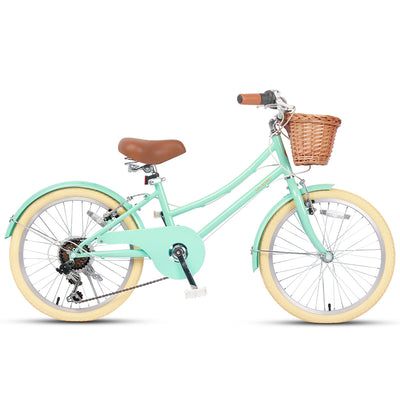


Table of Contents
Most 8-year-old girls fit best on a 20-inch bike. Smaller kids who are just starting to ride independently might do better with an 18-inch model, while taller girls with a longer inseam and advanced riding skills can consider a 24-inch bike. The right choice depends on height, inseam, and handling skills rather than just age. This guide covers measurement methods, size comparisons, and test-ride checks to help parents find a safe, comfortable, and properly sized girls' bike.
Why Age Is Only a Starting Point
Age helps parents quickly estimate the right wheel size, but it cannot account for leg length, torso proportions, hand strength, or riding experience. Cycling UK also notes that sizing kids' bikes by age only offers a rough guide, making height and inseam much more reliable.
The goal of choosing a kids' bike is not to find one a child can barely ride. Instead, she needs to be able to control the bike when stopping, turning, or losing her balance. The American Academy of Pediatrics reminds parents not to buy an oversized bike just so a child can grow into it, as a bike that is too large increases the risk of losing control.
Measure Her Height and Inseam First
Before browsing colors, baskets, or frame styles, measure your child's height and riding inseam. Height helps filter the general wheel size, while the inseam directly determines if she can safely clear the frame and put her feet down when stopping.
How to Measure Height
Have your child take off her shoes or wear flat socks, then stand naturally with the back of her head, shoulders, and heels against the wall. Place a hardcover book flat on top of her head against the wall, then measure the distance from the floor to the bottom edge of the book.
After measuring, do not just look at generic size charts for 8-year-olds. Instead, check the specific product page. Even if two bikes are both 20 inches, a low-step vintage cruiser, a fat-tire mountain bike, and a sporty frame will all have different actual clearance.
How to Measure Inseam
Have your child wear the shoes she will use for riding and stand naturally with her back against the wall. Place a hardcover book between her legs and pull it up gently to mimic the position of a bike saddle. Then, measure the distance from the floor to the top of the book. This is her riding inseam.
The inseam measurement is especially helpful when deciding between 18 vs 20 inches or 20 vs 24 inches. If her height meets the minimum recommended for a larger size, but her inseam is too short to give her safe clearance over the frame, do not rush to size up.
Fit Tip: The measurement is just the first step. If your child is between sizes, choose the smaller size if she rides less often or lacks confidence. Consider the larger size only if she has solid balance, handles the bike well, and can easily clear the frame.
Compare the Main Bike Sizes

The differences between 18, 20, and 24-inch bikes go beyond just wheel size. As the wheels get bigger, the frame usually gets taller and longer. These larger bikes travel faster and coast further, which means they require more steering, braking, and body control.
Choose an 18 Inch Bike for a Smaller Rider
An 18-inch bike is better for an 8-year-old girl who is on the shorter side, has a shorter inseam, or is just transitioning from training wheels to independent riding. The lower frame is usually easier to step over, making it simpler to put her feet down quickly when stopping.
If your child can only touch the ground with her tiptoes on a 20-inch bike, struggles to steer while pushing it, or tilts to one side constantly when starting, you should buy an 18-inch bike instead. Choosing an 18-inch bike does not mean it is too small. It simply matches her current control level. A kids' bike should first help her gain a sense of stability, rather than just lasting for more years.
Choose a 20 Inch Bike for Most 8 Year Old Girls
For an 8-year-old girl whose height and inseam fall within the correct range, and who can independently start, brake, and turn, a 20-inch bike usually offers the best balance of control and room to grow. This size works well for neighborhood streets, paved park paths, family rides, and short school commutes.
If your child prefers a classic look and mainly rides on flat surfaces, the Glerc Little Miss 20 inch girls bike is a solid option. It fits heights from about 46 to 59 inches and features a low-step frame, adjustable seat and handlebars, dual hand brakes, and a basket for water bottles or small items.
However, your child should be able to reach both brake levers easily and squeeze them with enough force before buying. The 20-inch version does not come with training wheels, so it is best for riders who already have basic balance skills.

Choose a 24 Inch Bike for a Taller Rider
A 24-inch bike is not the default upgrade option for all 8-year-old girls. It is only worth considering if your child is exceptionally tall, has an inseam that meets the specific model's requirements, and can smoothly handle starting, low-speed turns, and dual hand brakes.
Glerc's 24-inch bike targets older kids and tweens over 8, but the fit range varies by model. For instance, the Mars 24-inch model fits heights from about 51 to 65 inches, while the Nova 24-inch model fits about 54 to 64 inches. You cannot choose a bike size based solely on the fact that she turned 8.
Check Whether the Bike Fits Properly
After filtering the sizes, you still need to check the frame standover height, seat, and brakes. A properly fitted girls bike should allow your child to sit naturally without having to tiptoe, lean forward, or overextend her arms to reach the controls.
Check the Standover Height
Have your child stand over the frame with both feet flat on the ground. There should be about 1 inch of clearance between her crotch and the top tube. For low-step frames, you can judge by the actual frame shape, but you still need to ensure she will not hit the frame during an emergency dismount.
If there is no visible clearance, she is more likely to get hurt during a crash or sudden stop. On the other hand, if the frame is noticeably low and her knees bend too much while pedaling, she might already need a larger size.
Set the Right Seat Height
For kids who are just starting to ride independently or lack confidence, you can lower the seat first so they can place the balls of their feet firmly on the ground while seated.
As your child becomes more skilled, you can gradually raise the seat so her knees remain slightly bent when the pedal reaches its lowest point. A seat that is too low reduces pedaling efficiency, while a seat that is too high makes stopping and restarting difficult.
Test the Handlebars and Brakes
When your child holds the handlebars, her shoulders should be naturally relaxed with her elbows slightly bent. She should not lean forward excessively or fully extend her arms. Her knees should also not hit the handlebars when turning.
Have your child hold the front and rear brake levers and make three smooth stops while riding at a slow speed. She needs to reach the brake levers naturally and squeeze with enough force, rather than letting go of the grips to search for the brakes. Before children use hand brakes, parents should confirm that their hand strength is sufficient to stop the bike steadily.
Match the Girls Bike to Her Riding Ability
Finding the right size is just the foundation. The bike style also needs to match your child's actual riding skills and regular routes. For a child who is just starting to ride independently, simplicity, stability, and easy control matter more than extra gears or wider tires.
For Beginners and Less Confident Riders
Beginners do better with a single-speed bike that has a conservative size, a low standover height, an upright riding position, and simple operation. She should focus her attention on balancing, watching the road ahead, and braking, rather than learning complex shifting at the same time.
When your child is between sizes, do not use the excuse that she will grow quickly to justify buying a larger bike. A smaller, well-fitting bike is generally easier to control and helps encourage her to practice more.
For Confident Everyday Riders
Kids who can already start steadily, steer around obstacles, watch intersections, and stop smoothly can choose a standard 20-inch commuter or casual model. For sidewalks and neighborhood streets in the US, or residential roads and park cycle paths common in the UK, an upright riding position, dual hand brakes, and standard tires are usually enough.
At this stage, your focus can shift to riding comfort, frame weight, seat adjustment range, and a look your child enjoys. A bike that a child actually wants to ride is always more valuable than a model with more features that she does not like.
For Parks and Light Trails

If routes include grass, gravel, dirt paths, or light slopes, you can consider a mountain-style model with better grip, provided your child can already use hand brakes and gears proficiently.
The Glerc Mars 20 fits heights from about 47 to 59 inches. It features 20 by 2.8-inch wide knobby tires, a 6-speed shifting system, and disc brakes, making it ideal for kids looking to expand from neighborhood streets to park trails and light unpaved surfaces. Its tires and components add some handling weight, so it is better suited for an 8-year-old girl who already has basic riding confidence rather than a beginner who just took off her training wheels.
Avoid These Common Sizing Mistakes
The most common mistake is relying only on age without measuring the inseam, or buying a size up just to make the bike last longer. An oversized bike makes it harder for a child to start, stop, and handle low-speed turns, which often means she will end up riding it less.
Another issue is only checking if the child can sit on the bike without having her complete a full test ride. A proper check should include standing over the frame, starting independently, riding in a straight line, making low-speed turns, using both hand brakes to stop, and dismounting safely. If a parent needs to hold onto the bike during any of these steps, you should re-evaluate the size or model.
Parents should also avoid treating wheel size as a universal standard. Minimum seat height, standover height, and handlebar reach can vary between different brands, or even between different models from the same brand. You should always rely on the specific product's size chart.
Use This Final Bike Fit Checklist
Before buying, you can follow a simple process. First, record your child's height and riding inseam, then use the specific model's size chart to filter for an 18, 20, or 24-inch bike. Next, have her check the standover clearance, seat-to-ground reach, handlebar distance, and braking strength. Finally, choose a cruiser, vintage, or mountain-style bike based on the surfaces she will ride on most often.
For most 8-year-old girls, a 20-inch bike offers the most balanced choice, but being able to easily control the bike is more important than having room to grow into it for future years. The right bike should make your child feel stable on her first ride and leave her excited to go out riding again.
FAQ
Can a Tall 8 Year Old Ride a 24 Inch Bike?
Yes, but she must meet the height, inseam, and riding skill requirements at the same time. Some Glerc 24-inch models start fitting around 51 or 54 inches, so a taller 8-year-old girl with a long enough inseam and plenty of riding experience might fit.
Turning 8 does not mean she is automatically ready for a 24-inch bike. During a test ride, you must confirm that she can put her feet flat on the ground steadily, reach the brakes naturally, and make low-speed turns without relying on a parent for support.
Should I Buy a Bigger Bike for Her to Grow Into?
Buying a bike that is noticeably too large is not recommended. Your child might grow taller in a few months, but an uncontrollable bike right now will lower her riding confidence and increase the risk of falls when stopping.
A better approach is to choose a bike that fits her well now but has an adjustable seat and handlebars. This leaves room for growth without sacrificing her ability to control the bike today.
What Size Should I Choose If She Is Between Sizes?
If your child has limited riding experience, just took off her training wheels, or gets noticeably nervous with a bigger bike, go with the smaller size. If she is already a skilled rider, has a long enough inseam, and can easily handle a larger frame, you can consider the larger size based on the specific model.
Do not just compare height ranges. You also need to look at the minimum seat height, standover height, handlebar reach, and brake operation. Overlapping size ranges do not mean both sizes fit equally well. The final test is whether she can complete all riding movements independently and safely.


GLERC creates stylish, durable kids bikes designed to help families ride together with confidence. From sizing guidance to assembly support, our team shares practical advice to make every ride safer and more fun.