Skip to content


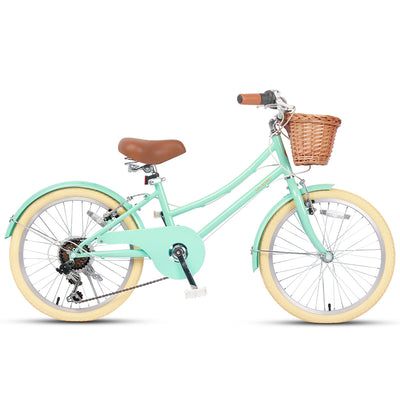


Table of Contents
A 20 inch girls bike usually fits children around ages 7 to 10, although some models cover a wider range of about 6 to 13. Age is only a starting point. This guide will help you use height, inseam, riding skill, and simple fit tests to decide whether a 20-inch bike is right for your child.
20 Inch Girls Bike Size Chart

A 20-inch bike is named for its wheel diameter, not the height of its frame. The word “girls” usually describes the colors, accessories, or frame style. It does not create a separate sizing system.
The ranges below provide a practical starting point based on common Glerc kids’ bike sizes. Always check the chart for the exact model because saddle height, frame shape, and handlebar reach can vary.
|
Wheel size |
Typical age |
Common rider height |
Best suited to |
|
18 inches |
5–9 years |
About 41–55 inches |
Smaller or less confident riders |
|
20 inches |
7–13 years |
About 45–61 inches |
Independent riders moving to a larger bike |
|
24 inches |
8 years and older |
About 51–67 inches |
Taller and more experienced riders |
The wide age range is why age alone can be misleading. A tall seven-year-old may fit a 20-inch bike well, while a shorter nine-year-old may still feel more confident on an 18-inch model.
Measure Height and Inseam
Height helps narrow down the wheel size. Inseam gives a better picture of how safely a child can stand over the frame and reach the ground. Measure both before ordering a girls 20 inch bike online.
Measure Her Height
Have your child remove her shoes and stand straight against a wall. Her heels, back, and head should remain in a natural position. Place a hardcover book flat on top of her head, mark the wall, and measure from the floor to the mark.
Use her current height rather than a measurement from a school or medical record. Children can grow several inches between bike seasons, and a small change may place them in the overlap between two sizes.
Measure Her Inseam
Have her wear the shoes she normally uses for riding. Ask her to stand with her feet about six inches apart. Place a hardcover book between her legs and press it up firmly to mimic a bike saddle.
Measure from the floor to the top of the book. This riding inseam is more useful than the inseam printed on a pair of jeans because clothing measurements do not reach the same point on the body.
Compare the Measurements With the Size Chart
Compare both measurements with the chart on the product page. If height suggests a 20-inch bike but inseam is below the recommended range, the bike may still be too tall.
When a child is between two sizes, skill should break the tie. A new or cautious rider will usually gain more control from the smaller size. A confident rider may use the larger option only when she can stand over it safely and reach every control.
Check the Bike Fit in Person
Measurements narrow down the options, but they cannot show how a child feels on the bike. The final test is whether she can control it without stretching, leaning sharply, or depending on an adult for every start and stop.
Check Standover Clearance
Ask her to stand over the top tube with both feet flat on the ground. The frame should not press into her body. A beginner may benefit from extra clearance because she is more likely to step off quickly when losing balance.
A sloped or step-through frame can create more clearance, but that does not prove the whole bike fits. Reach, brake access, and bike weight still need to be checked.
Check Reach and Brake Control
With both hands on the grips, her shoulders should look relaxed and her elbows should remain slightly bent. She should not need to lock her arms or slide forward on the saddle to reach the handlebar.
Ask her to operate each brake without moving her hands on the grips. She should be able to reach and squeeze each lever firmly. If adjusting the lever does not solve the problem, the bike may be too large.
Test Starts, Turns, and Stops
The National Highway Traffic Safety Administration notes that an oversized bike is harder to control. A short ride in an empty driveway, quiet park, or traffic-free parking lot can reveal more than an age label.
- Ask her to start without an adult holding the saddle.
- Have her ride a straight line and make turns in both directions.
- Ask her to brake at a marked point without dragging her feet.
- Watch whether she can get off the saddle and place a foot down quickly.
If she looks tense, wobbles during every start, or cannot stop on command, stay with the smaller size. The best bike is the one she can control today, not the one she may grow into next year.
Choose Between 18, 20, and 24 Inch Bikes
Wheel sizes often overlap because children grow at different rates. Riding experience, body proportions, and confidence should guide the final decision rather than age alone.
Stay With 18 Inches for Easier Control
Choose an 18-inch bike when the rider is near the bottom of the 20-inch height range, has a shorter inseam, or still needs help starting and stopping. A smaller bike is usually easier to steer, lift, and recover after a wobble.
An 18-inch model may also be the better choice if training wheels are still necessary. Many 20-inch bikes are designed for independent riders and do not support them.
Choose 20 Inches for the Best Fit Now
A 20-inch bike is a good choice when the rider fits the model’s height and inseam range, reaches the controls comfortably, and can ride without being held. It gives growing children more room than an 18-inch bike while remaining easier to handle than a 24-inch model.
Do not judge the fit by whether her toes can barely touch the ground. She should also be able to start, turn, brake, and step off without the bike feeling heavy or intimidating.
Move to 24 Inches When She Is Ready
Consider a 24-inch bike when she is near the upper end of the 20-inch range and already rides with confidence. Cramped knees, a fully raised seat post, and handlebars that feel too close are common signs that a 20-inch bike is becoming too small.
Do not move up only to create more growing room. A 24-inch bike usually has a longer frame and wheelbase, so it may feel harder to turn or stop even when the rider is tall enough.
Choose the Right 20 Inch Girls Bike
Correct sizing comes first, but riding conditions also matter. After confirming the size, choose between a vintage, cruiser, or mountain-style bike based on where she rides most often. Then compare the bike’s weight, brakes, gearing, and training wheel compatibility with her current skills.
Match the Bike to Her Usual Routes

Start with where she will ride most often. A single-speed bike is usually enough for neighborhood streets and paved park paths. If her regular route includes hills, gears can make climbs easier.
For mostly flat rides, the Glerc Little Molly 20 Inch fits the job well. It fits riders about 48–61 inches tall and pairs a simple single-speed setup with a front V-brake and rear coaster brake. The enclosed chain guard, fenders, bell, and wicker basket add useful everyday features without making the controls complicated.
Check Weight, Brakes, and Gears
Bike weight affects starts, low-speed turns, and what happens after a fall. Ask whether the child can push the bike, hold it upright, and lift it from the ground without becoming frustrated.
Choose brake controls she already knows or can learn safely. A coaster brake works by pedaling backward, while hand brakes prepare riders for larger bikes. Gears are useful on hills, but they also add another control. A child who rides mainly on flat streets may prefer a simpler single-speed setup.
Confirm Training Wheel Compatibility
Never assume training wheels can be added later. Frame shape, axle design, gears, and derailleur placement may prevent installation.
The 20-inch Little Molly does not include training wheels, and the geared Missy is not compatible with them. If a child still relies on training wheels, choose a compatible model or stay with a smaller size until she can balance independently.
Conclusion
A 20 inch girls bike usually fits riders around ages 7 to 10, but height, inseam, and control provide a more reliable answer. Measure first, check the exact model’s size chart, and choose the bike she can start, steer, and stop confidently today.
FAQ
Does Every 20 Inch Girls Bike Fit the Same Height Range?
No. Bikes with the same wheel diameter can have different frame shapes, saddle ranges, and handlebar positions. Compare your child’s height and inseam with the chart for the exact model instead of transferring the size range from another bike.
Can a 20 Inch Girls Bike Have Gears?
Yes. A girls bike in a 20-inch size may be single-speed or use several gears. Single-speed bikes work well on flatter routes, while geared bikes can make hills and longer rides easier for children who are ready to shift.
Can Training Wheels Be Added to a 20 Inch Bike?
Only when the frame and rear axle are designed to support them. Many 20-inch bikes use a kickstand instead, and geared models may not leave enough space around the rear derailleur. Confirm compatibility before buying the bike or a separate training wheel set.
How Long Can a Child Use a 20 Inch Bike?
A child may use a well-fitted 20-inch bike for several riding seasons, but growth rates vary. Adjustable seats and handlebars extend the useful fit range. Move up when the rider exceeds the listed height range, reaches the seat-post limit, feels cramped while pedaling, or can safely control a 24-inch bike.


GLERC creates stylish, durable kids bikes designed to help families ride together with confidence. From sizing guidance to assembly support, our team shares practical advice to make every ride safer and more fun.